Hydraulic and Hose Identification Tags
Hose tags are one of the simplest, most cost-effective tools a facility can use to keep hose systems running safely and on schedule. Whether you're managing dozens of lines in a chemical plant, working with food distribution, or tracking fluid transfer systems across a fleet of heavy equipment, knowing what's in a hose, how old it is, and when it needs attention can mean the difference between a routine swap and an unplanned shutdown.
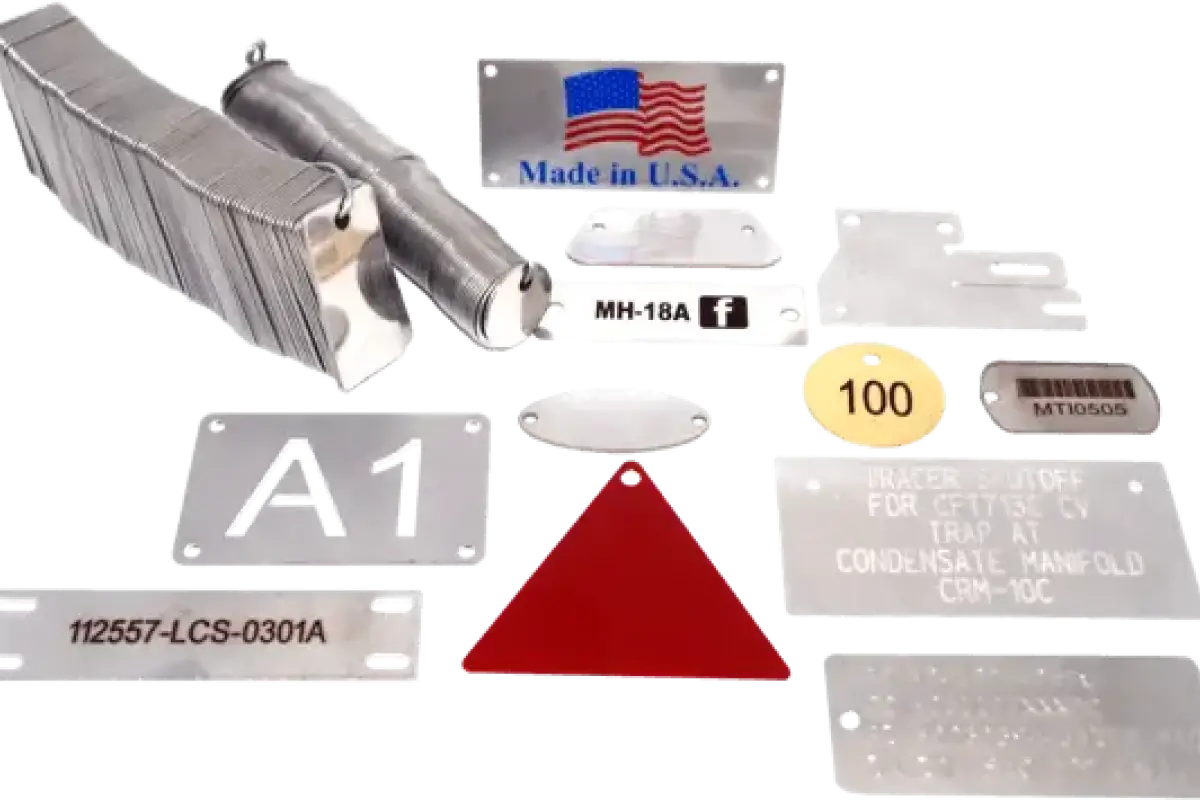
Big City Manufacturing produces standard and custom hydraulic hose tags for industrial applications, offering four material options: plastic, stainless steel, aluminum, and brass, so you can match the tag to the environment.
Hose Identification Tag Materials
To match the environment you're working in, Big City Manufacturing offers different material options. Three are hydraulic hose metal tags, and the fourth is a plastic tag. Here's a quick breakdown to help you choose the right kind.
Plastic
A practical, budget-friendly option for lower-demand environments. Plastic hose tags are lightweight, resistant to fading, and easy to mark, making them a solid choice for facilities where the primary need is clear identification without heavy exposure to heat or abrasion.
Stainless Steel
Built for demanding conditions. Stainless steel hydraulic hose tags are corrosion-resistant, scratch-resistant, and hold up in high-temperature environments, so they're well suited for oil and gas, chemical processing, and other industrial applications where durability is critical.
Aluminum
Anodized aluminum tags offer a hard oxide surface layer that's scratch-resistant and corrosion-resistant, in a lightweight, easy-to-handle package. A reliable choice for a wide range of industrial environments, particularly where weight and cost-efficiency matter.
Brass
Brass is moisture-resistant and weathers well in outdoor or element-exposed applications. It handles high temperatures, resists corrosion, and is commonly specified for hose and valve identification in facilities that need durability with a cleaner, finished appearance.
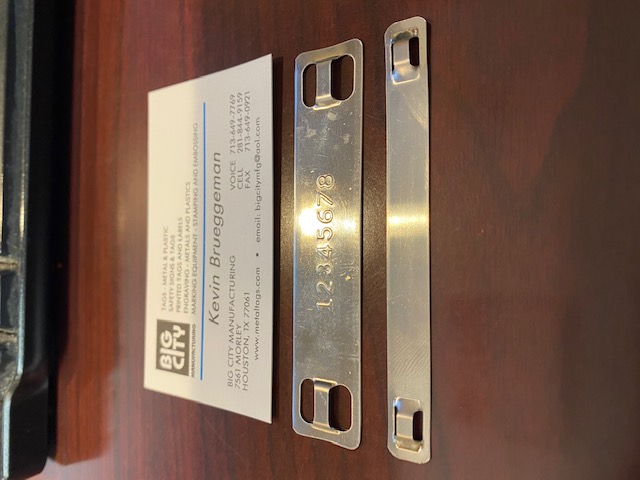
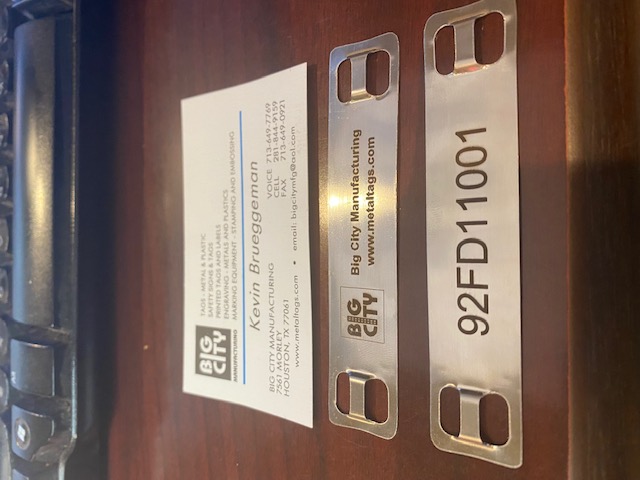
Good hose identification keeps your team working from the same set of facts. Tags from Big City Manufacturing can be marked to display:
- Hose type and part number
- Pressure and temperature ratings
- Product or media being transferred
- Lifespan and installation date
- Vendor name and contact information
- Physical location within the system
Why Proper Hose Identification Matters
A missing or illegible tag might seem like a minor issue until someone connects the wrong line or a hose fails because nobody knew it was due for replacement. Proper identification keeps your team informed, your systems traceable, and your operation moving.
Safety
Tagged hoses let operators quickly verify pressure ratings, fluid types, and hazard warnings before they start work, which is especially important when lines carry volatile, toxic, or high-pressure media.
Maintenance and Uptime
A tag with an installation date and part number makes it easy to stay ahead of scheduled replacements rather than react to failures. Unplanned hose downtime is expensive; good labeling = cheap prevention.
Compliance and Traceability
Many industries require documented maintenance records for hose systems. Tags support that paper trail by keeping critical specs visible and accessible at the hose itself.
Give us a call for more information.
Industries We Serve
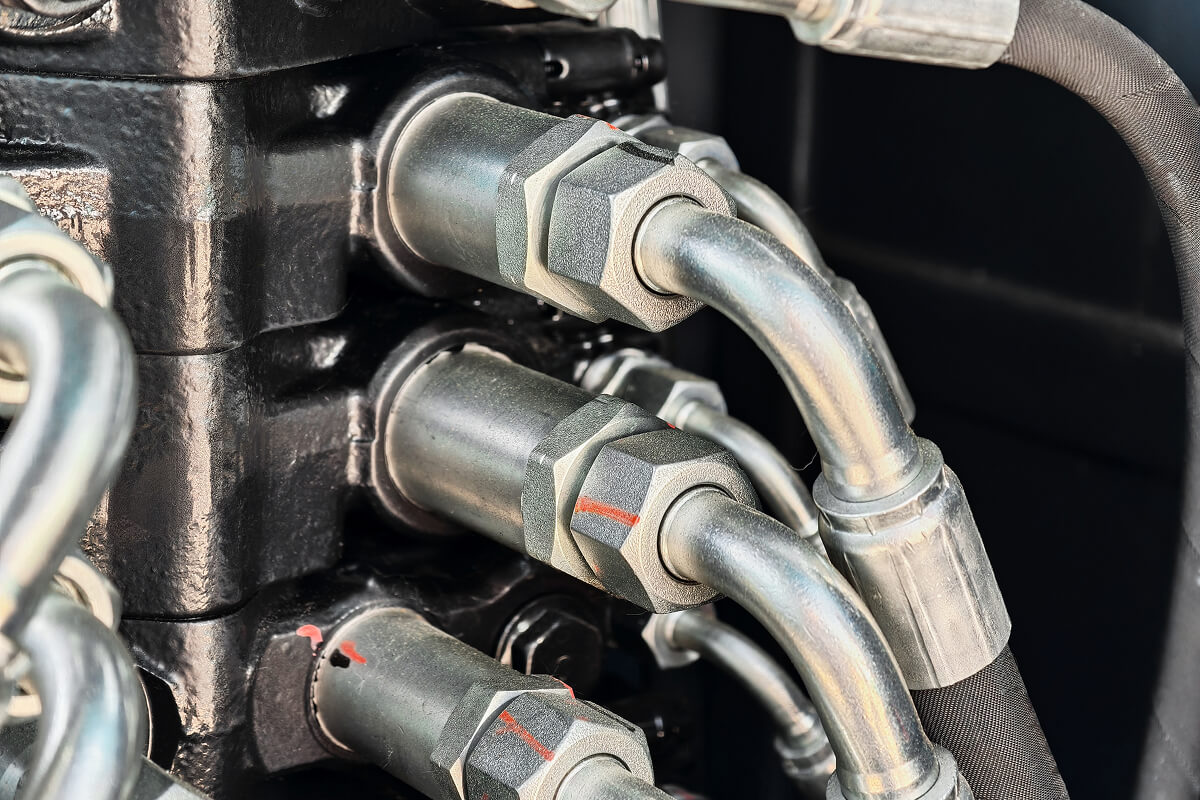
Hydraulic hose tags are used in a wide range of industries where hose system failures carry real consequences:
- Chemical processing
- Oil and gas
- Food and beverage
- Heating, air-conditioning, and ventilation (HVAC)
- Automotive
- Healthcare
- Agriculture
- Power generation
- Construction
- Transportation
Get the Best Hose Tags From Big City Manufacturing
Keeping your hose systems properly labeled shouldn't be complicated. Big City Manufacturing makes it easy to get the right hose tags for your application, in the material, size, and configuration your operation requires. Request a quote today, and let's get your systems tagged.
Frequently Asked Questions
What information should be included on a hydraulic hose tag?
Most maintenance programs include the installation date, hose specs (pressure rating, temperature range, and media type), part number, and a location or system identifier. In environments with stricter compliance requirements, such as chemical processing or food and beverage, for example, vendor contact information and the next inspection date are also common additions.
How often should hose assemblies be inspected, and how do tags help?
Industry guidelines generally recommend inspecting stationary equipment hose assemblies every 3 months and mobile equipment every 400–600 operating hours (or 3 months, whichever comes first). A hose tag with an installation date and service history provides inspectors with an immediate reference point at the hose itself, rather than requiring them to cross-reference a separate maintenance log.
Can the same tag material be used in all environments?
Not always. Stainless steel holds up best in high-heat or chemically aggressive environments, while brass performs better where moisture is the main concern. Plastic works fine in dry, indoor settings but won't last long in outdoor or chemical exposure scenarios. Choosing the right material for the environment is as important as choosing the right hose.
Do hose tags have to be custom-ordered, or are standard options available?
Big City Manufacturing offers both. Standard hose tags are available for straightforward identification needs, and custom tags can be produced to your specifications, including custom sizing, sequential numbering, and specific markings for your facility or compliance program.